
How Far Are We from Getting a Real Holographic Display Like the Ones We See in Sci-Fi Movies?
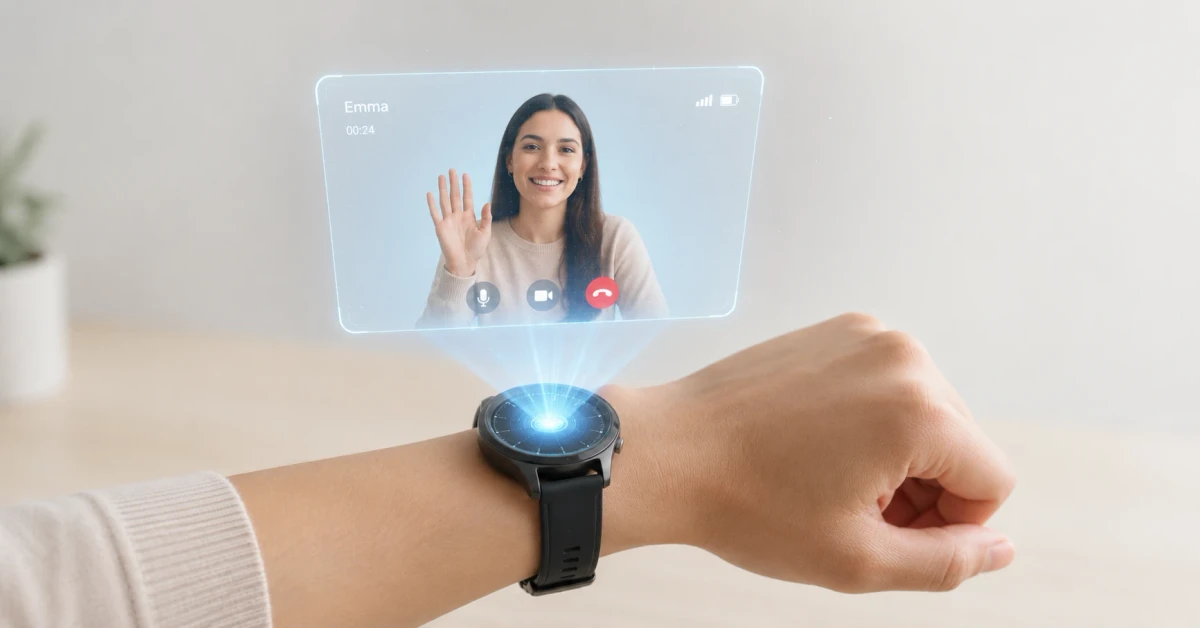
Hi nerds, this time I really have to break down this article into pieces, because it's kinda complicated to actually understand how much we actually need to create a real hologram display. Not a gimmick, but a real working piece of tech. Not faking the hologram thing with glass mirrors or any kinda 2D illusion. Here I'll be talking about the real thing, ya... So let's begin. Because this is a hologram display, we need at least 2K, or let's make it even easier with a Full HD hologram.
The Real Calculations
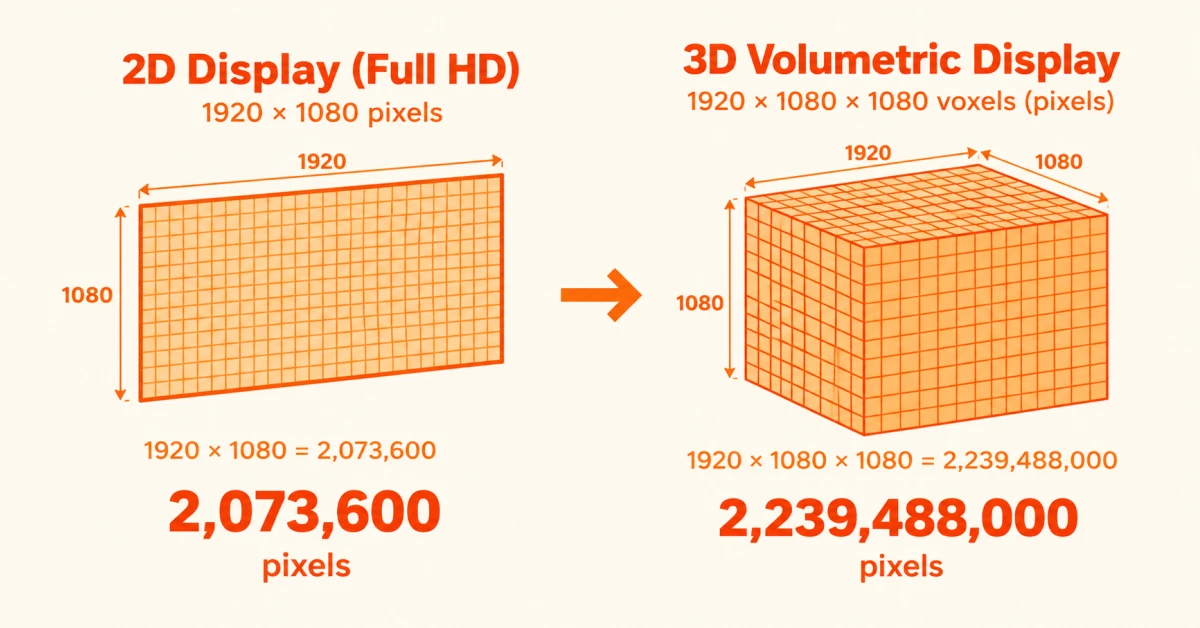
So here is some basic math for you guys to understand what I'm talking about. See, a Full HD display has 1920 × 1080 pixels, that means a total of 2,073,600 pixels. Right? Yes. Now, our normal mobile processors can handle this resolution easily, no issues. But when we talk about making a volumetric display, these numbers will escalate very quickly. Here is some simple math to explain this: normally we have X and Y axes for a 2D display, but for a 3D hologram display, we need another plane, the Z axis. So let's say our imaginary cubic display is 1920 x 1080 x 1080, so the pixel count now is 2,239,488,000 pixels.
Ok, think of it this way: we have 1080 Full HD displays connected to a processor for handling the display output. In simple words, we have a total of 1080 monitors. I'm not talking about resolution here, I'm talking about 1000 + 80 = 1080 physical displays. Now any modern processor will give up on that number easily. I don't think any commercial processor can handle that amount of pixels at a time, and we are not even talking about the refresh rate right now.
Applying Some Old Technology to Overcome Some of the Issues
See, we do not control all the pixels simultaneously, right? In a normal 2D display, we never have simultaneous control over every pixel. That means at one point in time, we technically cannot turn all the pixels on. Now the question is why? Because to control all the pixels independently, we need to hook signal wires to all the pixels. Just imagine 2,073,600 live connections. That will make a simple display overcomplicated to operate because now the display driver needs physical output connections of 2,073,600. Think of an Arduino board with 2,073,600 GPIO pins! And I have not even calculated it for a color display, as a color display needs 3 connections to control the RGB part of the pixel, so that would be a total of 2,073,600 x 3.
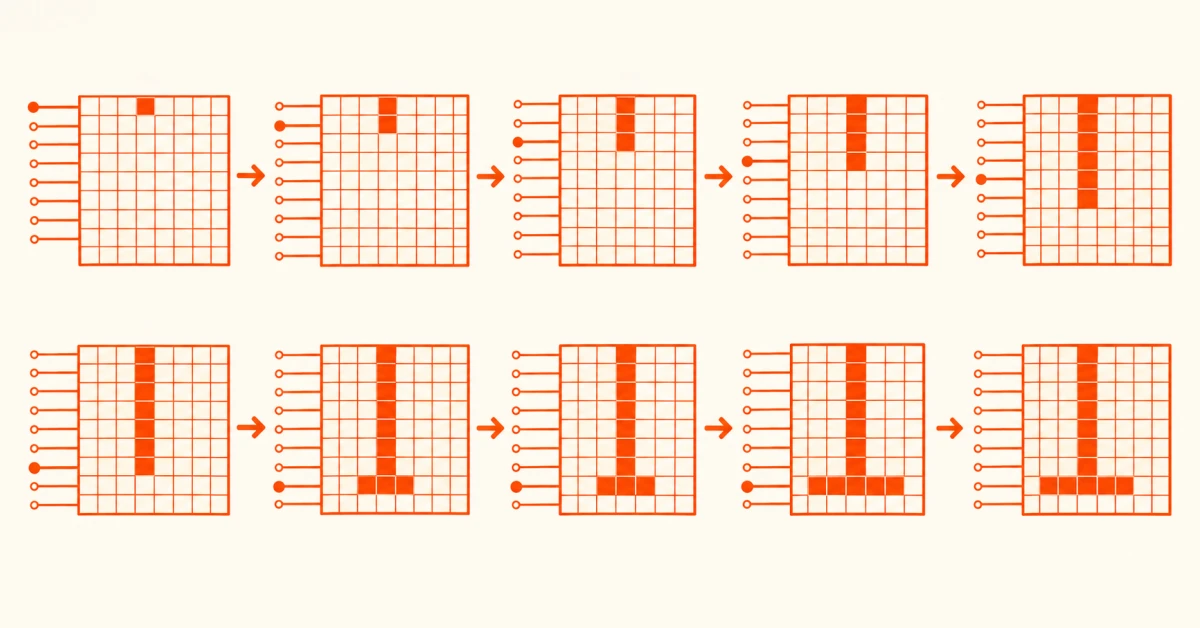
This is exhausting. So what we actually do is we never control all the pixels individually. We use a technique to control all the pixels by only hooking all the row lines in one part, taking out 1080 signal wires (for ease of use I'm not considering 3 individual lines for RGB), and we also take out single wires for columns in the same way, so we get 1920 connections. So in total, we only have to now control 1080 + 1920 = 3000 lines. That is because only one row is active at one time, and the entire vertical rows turn on one after another, and because the human eye cannot see that fast, it feels like everything is working together.
See, describing this thing with text is hard to understand, but I'm just giving you an idea of how things work in the 2D display space. Now we can use the same technique for a cubic 3D display, right? I mean, one display is on in the Z grid at a time, that technically reduces the load, as now we are not simultaneously controlling all the 1080 displays at a time. But this is not that simple anyways. We'll now have a Z-sync, that basically means at what rate the screen will be refreshed in the Z axis. This is the same as V-Sync. Here is the real deal: the normal displays we use generally fall between 60Hz to 144Hz. No modern commercial GPU can efficiently handle V-Sync along with Z-Sync, because the processing cost increases simultaneously.
The Best We Can Do
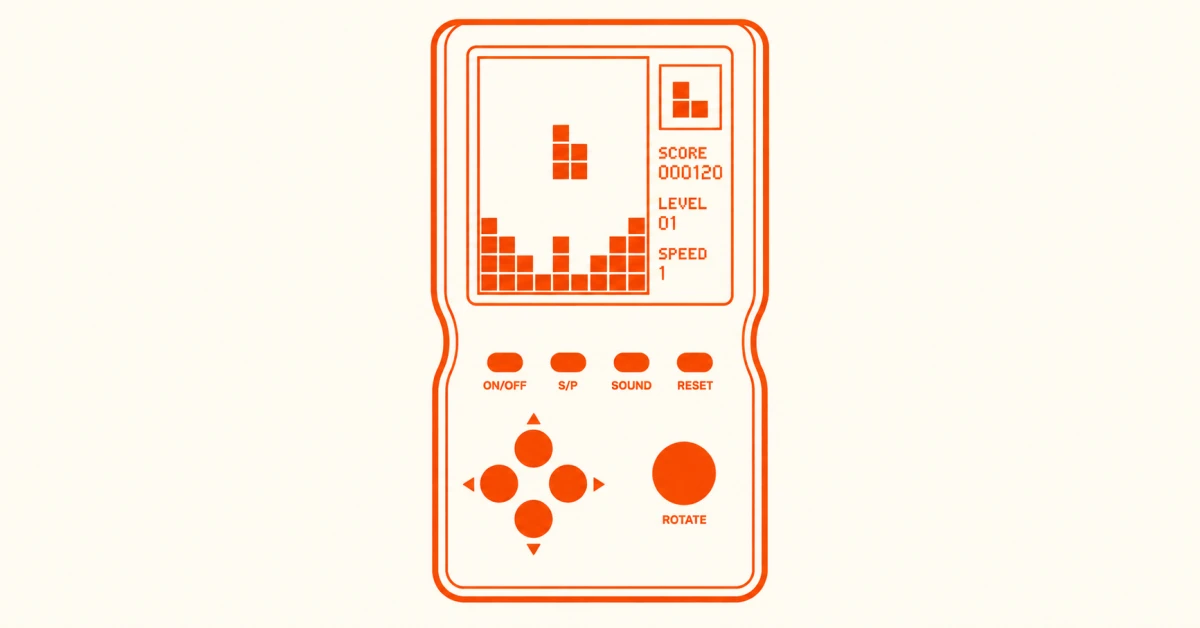
The best we can do is making 4 or max 5 panels in the Z axis. It will be like the retro times we had those block games in a tiny Nintendo gaming console—bigger pixels and blocks, low fps gaming. But we are getting somewhere.
This is not Even the starting of the Bigger Problem we Have Ahead
So this was just about our imaginary screens, but the real challenge is to project light in mid-space, so that we can see that point with no hard surface for the light to sit on. Kinda like illuminating air molecules at a particular point in space. And yes, we are still missing this technology, which is the key ingredient. We can even somehow manage to control the XYZ pixels by either reducing the pixel count or doing some difficult math to bring out some new algorithms that might efficiently handle some amount of holographic content.
Hope is All We Have
I know people are super excited about holotech becoming real, doing stuff like the Iron Man movies do, but the real truth is we are currently missing the key technology. Even so, I'm very positive about it. We are just one step away from having something revolutionary that will change the entire tech industry. It will be as revolutionary as AI. I'm hoping we find a secret in nature that will someday make this dream of getting a holographic display—A TRUE HOLOGRAPHIC DISPLAY—real.








I’m a Software Engineer from Northeast Assam, India, with 10+ years of experience in the field of computer science. Over the years, I’ve worked with large enterprises and well-established companies, helping them design, build, and scale robust software solutions.